There has been a push in recent years, I have noticed, to normalise sexual deviancy in the form of sex work, which we used to call prostitution.
We are flooded with content about ‘sex workers’ like Lily Philips and Bonnie Blue, and the whole thing is packaged as entertainment.
The emergence of websites like Only Fans have played quite the role in making selling your body to strangers on the internet seem like no big deal. There was a recent article that claimed that 4 per cent of young British women are now on Only Fans.
In Ireland too, we love to kid ourselves about sex work, to the point where there’s almost a disturbing allure attached to an industry rooted in misogyny and abuse.
A couple of years ago, I well remember many Irish newspapers, both North and South of the border, rolling out red carpet-esque coverage for an ‘NI OnlyFans star’ called Meghan O’Neill, who claimed the porn industry was the “nicest” she’s ever worked in. I could have choked on my cornflakes reading it. How absurd.
Anyway, all of this is to illustrate the point that we are trying to normalise something which is at its core degrading and never in the best interest of the woman. We should stop pretending that paying for sex is anything but abuse.
I also appreciated the point made by others in recent weeks, including by John McGuirk on this platform, that we’ve seen a major amount of manufactured outrage and hysteria over Elon Musk’s Grok putting people into AI bikinis, while no such political outrage exists about websites like Escort Ireland.
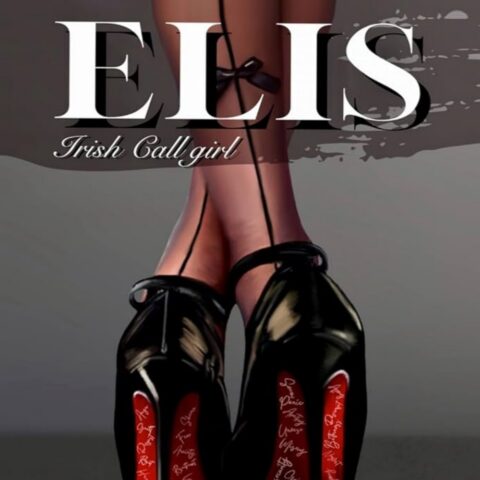
I thought I had some grasp of how horrible the industry is. That was until I read ‘Elis: Irish Call Girl,’ a memoir by Czech woman Anna Rajmon, which catalogues one horror after another during her time as a prostitute in Ireland beginning in 2020 when she was aged in her twenties. She details how she used the pretend name Elis.

By the time I reached the fifth chapter of the book, I felt physical repulsion at what I was reading. I genuinely had to break for a few days to continue. So horrible and debased are the contents on its pages that you have to pace yourself. I really would love the sex-work feminist types in Ireland to read it, and tell me again how this is empowerment.
Nothing could have prepared me for how grim this was. To cut a long story short, Anna had a difficult childhood and from a young age entered into a series of disastrous relationships with men who were no good for her, or for anyone.
She became pregnant while still a teenager after rebelling against her parents and leaving home. She went on to suffer domestic abuse from a number of male partners, including the child’s father, whom she had married, and essentially ended up racking up large debts. Mental health problems contributed to her losing her job, and desperate to provide for her daughter, she turned to an adult club in Prague, where men paid her for sex.
The stories from that part of the book are disturbing, and include the tale of one truly sick individual, a regular client named Matthew, who showed up one day with a real-life coffin, demanding that the girls make use of it when they were with him. You get the gist.
In 2020, Anna ended up in Ireland, where her brother had gone for work. Encouraged by the family connection and thinking it was an opportunity to make some money to send home, she responded to an ad by an escort agency.
“Then I came across a Czech agency that mediated work in the adult industry in Ireland,” writes Anna. She details the ad, which read: “Hello ladies; we would like to offer you Tours in Ireland. We provide effective advertising, accommodation, transportation, and a team of trained people who will care for you and are available to you due to their professional conduct and experience. You can earn €4,000 per week with us. We will help inexperienced girls and explain everything. Our motto is correctness, discretion, and reliability. If you are interested in our offer, don’t hesitate to contact us.”
While writing the book, Anna found the ad on the internet; the same one she had responded to. At the time, it had 98,980 applicants. It was published, she says, by a lady called Susan, who became her “boss”, though a word more commonly used is pimp.
The reply she got back detailed how earnings are split 60% to 40% – with 40% going to the agency. Girls selling themselves would have a non-stop operator on their phone, based in Ireland, through the app Telegram, to assist those, especially the majority who had a low level of English.
As bad as Prague was, Anna said that Ireland made her want to return to the Czech capital. She said she couldn’t even imagine what she was getting into. She left her daughter at home and pretended to her parents that she had secured a normal job in Ireland.
“Throughout the journey [to Dublin] I kept asking myself endless questions about what it would be like and when I would return home,” she writes.
Chapter 5 of the book is titled ‘How to Lose Freedom.’ It has to be the worst in the whole book, and details how she was sent to Dundalk as soon as she arrived, borrowing money for the hotel she was to use, which she couldn’t afford after all the expenses. The men she met here ranged from drug dealers to farmers who thought soap was a dirty word.
“It wasn’t suspicious at all when a young girl with a giant suitcase arrives to stay at a hotel for three days, doesn’t speak any English, and can pay for accommodation and a deposit in cash,” she reflects.
It didn’t seem suspicious to anyone including hotel staff in 90 per cent of cases. She downloaded the Telegram app, which was the platform Susan, the woman in Ireland running the agency, used to communicate with her.
“From morning till night, every day, every minute all you could hear was the sound of incoming messages. You didn’t have a moment of peace; you couldn’t ignore it or even turn off your phone.”
Time meant money for the agency and money was everything to them. It wasn’t uncommon, she writes, for a girl to have to handle eight to ten men in a row, and as long as the phone was ringing, nobody cared if you could handle it physically or mentally. She cried and begged so many times that she was no longer able to continue; that her body trembled and she could barely walk, but nobody cared.
The operators she said, some of whom were on maternity leave, (while one was a secondary school teacher who did the work temporarily after experiencing health problems) “under tremendous pressure, participated in the atrocities that were happening,” all for a monthly salary of about a thousand to fifteen hundred euros.
Depressingly, Anna – or Elis – said during her time in Ireland, she only came across three operators who were disgusted and were able to show emotions. It was normal for these Irish operators to force girls to satisfy at least fifteen men a day, making them work after midnight.
These operators of course, were all women, and so I’d like to see the feminists answer to that one. She adds that she was constantly emotionally blackmailed like being told to “Think of your daughter; you’ll do it for her so that you can be back with her soon.”
Anna was advertised like an ad selling meat, human meat. Men open these websites daily, men whom we probably know and see walking down the streets in our towns. It’s like buying perfume or ordering food. These aroused creeps can choose a blonde or a brunnette, short or tall, curvy or slim.
Each ad, as you can see on Escort Ireland for example, contains reviews where men vividly describe their experience and recommend her to other slimy men. Who has the right to judge something like this? In Ireland, we sit back while human beings are advertised.
I don’t want to go into the graphic details, but on the first day here, she earned €700 and satisfied seven men, each of whom stayed with her for half an hour. In the evening, Anna says her body hurt like with the flu, her muscles were stiff, and she just wanted to go to bed.
This is often her experience in the book, but she is constantly sent more and more men by the operators, barely with time to eat, until the day is out and she lies down crumpled on the floor. Her protestations don’t work with those running the prostitution conveyor belt, and as long as the money was coming in, there was little rest or chance to feel human.
Whilst the ad said she could earn €4,000 a week, that wasn’t true at all. She was left with 60% of that, from which she still had to pay for things like food and transportation and cosmetics. The sex agency only contributed 40 per cent for accommodation. Even after the first day, she was in financial debt.
The undoubted worst part of the book is when she details the first man she met in Dundalk about an hour after arriving at the hotel; a sixty year-old Irishman with a terrible rural accent. If she could go back now, she said she would kick him out, but at the time she remembered the manipulative operator telling her to convince herself she could handle it.
“It still makes me sick when I think about it,” says Anna, who details how the man hadn’t showered for at least a week, could not be persuaded to do so, and smelled of tobacco and cigarette smoke. He flung two €50 notes in her face and that was it. You get the picture.
From there, she went all over the country, from Dublin, where business was booming (even in Covid) to Belfast, Cork, and Limerick. Sligo, Mullingar, Maynooth, Ballina, and Kilkenny are also mentioned, with almost every one of these places accompanied by stories “as pleasant as hell.” There was demand in every place. She remembers thinking: “What the hell have I gotten myself into? What am I doing here, and why are these people so mean and greedy?”
The influence of pornography on the behaviours of men paying for her body is well evidenced in the anecdotes she gives. She says that men often wanted to live out some fantasy they had seen in a porno film, and were unable to distinguish between what was pretend and what was real life. Porn had helped to warp their minds and meant they viewed women in real life as little more than objects for their gratification.
There are multiple stories in the book, including from other prostitutes, of men holding knives to their throats, beating them up, and leaving women in hospital beds recovering from injuries. One girl was beaten unconscious, robbed and tied up with phone charger cables in a bath tub, where she was found the next morning by hotel staff. She just about survived.
From her experience, Anna says that often, she encountered violence from men whom you would never expect – “A kind, well-groomed middle-aged man with a wedding ring on his finger” and a children’s wallpaper on his phone.
“You lie helpless on the floor, unable to scream; everything hurts; someone is hitting you. Crushing your bones; occasionally, you hear the crack of your ribs, you see blood and you don’t know where it’s coming from, tears stream from your eyes and your whole body screams ‘STOP,’ but he doesn’t stop!,” she writes of the cruel and inhumane treatment she regularly experienced.
It wasn’t just Irish men either, with Anna writing that she refused to see clients of certain races and those from Western Europe, some of whom had beaten women so badly they ended up in hospital. Slovaks and Czechs were on her list of men she wouldn’t see, as well as men from most Eastern European and Asian countries.
She planned suicide in her mind many times while in Ireland. Another escort she worked with had an abortion after getting pregnant by a client who demanded unprotected sex. Speaking about the money she made even on a busy day, she writes: “It wasn’t worth it, absolutely not worth it.”
The Czech woman speaks about how houses and apartments were also used, where owners were happy to avoid paying taxes and supported prostitution. It was common for Asians to rent out their properties for such purposes, she says.
Most of the men who visited were older, smelly males with rotten teeth and slightly overweight, but Anna also recounts being with other types of men like a lawyer who worked in Dublin and came dressed in a suit.
“People from various social backgrounds approached us with different desires; doctors, lawyers, politicians, actors, rugby players, labourers, sales associates, drug dealers, basically a bit of everything, and it was not uncommon for us to recognise our clients from television,” she says.
To this day, Anna Rajmon has nightmares, trouble concentrating and a psyche which “is slowly killing me, mainly because I had slept with about three thousand men.”
The book is a fascinating though thoroughly depressing read. It offers a rare insight into a problem Ireland would rather ignore.
The book also evidences that the elevation of sex work is about one thing – money, money and more money. It is never empowerment, no matter what a glossy magazine tries to tell you. It’s always abuse. And it is a form of abuse that deserves some long overdue political and social outrage. But for that, sadly, we’ll probably have to wait with bated breath.