One unfortunate judge is being burned at the stake this week. What was his great wrongdoing, you ask? Lenient sentencing for another atrocious attack on our streets? Letting another a sex offender a slap on the wrist?
No – the media meltdown this week is over Circuit Court Judge James O’Donohoe’s claim that cyclists have become a “nightmare” in Dublin. He made the comments in court on Monday this week during a damages award for an injured cyclist, prompting no less than a formal complaint against the judge to the Judicial Council.
The judge made the remark after he had decided to reduce the amount of damages awarded to a cyclist – from €50,000 to €10,000 – who suffered a brain injury after he collided with a motorbike six years ago, ruling that the injured cyclist had been mainly responsible for the accident.
“You never know with cyclists what they are going to do or anticipate what they are going to do,” said the judge.
So awful was his crime that the media have gone to the lengths of digging up a 2012 conviction and fine the same judge received for failing to provide a breath test to a garda. A punishment he received 14 years ago.
Mary Carolan, the Irish Times’s legal correspondent reports: “Judge O’Donohoe’s case attracted little attention at the time […] O’Donohoe faced no calls from either judges or politicians for his removal from office.”
The article then goes on to detail how as per Article 35.4 of the Constitution, judges of the Supreme Court, Court of Appeal or the High Court shall not be removed from office except for “stated misbehaviour or incapacity” and then only upon resolutions passed by Dáil Éireann and by Seanad Éireann calling for their removal.
“This rule applies, under statute, to judges of the circuit and district courts,” writes Carolan in the lengthy piece, as she details how a procedure for the removal of a judge is set out in Standing Orders of both Houses of the Oireachtas.
The Taoiseach has even commented on the whole fiasco after Ivana Bacik raised the matter in the Dáil, telling everyone how her party, Labour, has been on the case to submit a formal complaint about the judge to the Judicial Council.
The Taoiseach said in response: “I reject any stereotyping of cyclists or any categorisation of cyclists. I don’t want to breach any separation of powers, when I’m very clear that’s not. Any general comment to the effect that impacts negatively in terms of the perspective on cyclists is wrong and shouldn’t happen.”
Mr Martin seemed to want Ms Bacik and others in her party to also look on the brightside. The brightside being that his government has splurged €1 billion on cycling and walking initiatives in the form of “transformative projects” dotted across the country. He is, of course, talking about the hugely controversial and eye-wateringly expensive swathe of cycle lanes, costing millions per project, with their development leading to claims from locals that they are wiping out jobs and businesses in the process.
Politicians always make things seem so simple and straightforward. Everything is great on the surface, we’re told, but really half the country is up in arms about disappearing road space for cars, poor planning, confusing (and dangerous) junction signs, a total lack of parking, and enormous cost to the taxpayer. Look at Deansgrange, or Sandymount, or Dundrum, or Cork. People everywhere are concerned that prioritising cyclists at the cost of all else will only accelerate the decline of our towns and cities and villages.
Cycling campaigners were also chomping at the bit of course – with the Dublin Cycling Campaign describing telling RTÉ that the comments were inappropriate, reinforcing “dangerous” attitudes towards cyclists.
Campaigner Una Morrison said she was “upset and concerned” about these types of “sweeping statements.”
Cllr Karl Stanley of the Social Democrats, a member of the Dublin Cycling Campaign, added: “I think it’s dangerous to apply labels to a whole group of people who are just individuals. I think we have to be very careful, especially people who have that sort of position of power, that their language matters because it affects how other people see the people around them.”
The sheer amount of attention devoted to the story appears nothing but a clear attempt to stir the pot until it reaches the heights of some sort of appalling national scandal. Ciarán Cuffe, co-chair of the European Green Party was apparently so horrified by Judge O’Donohoe’s remarks that he “nearly choked on his cornflakes” upon reading them.
Heck, the commentary didn’t stop there. The Dublin Commuter Coalition said it was disappointed by the judge’s comments, and that they perpetuated an “on-going culture war” about road usage. Cycling Ireland said it was “concerned.”
The Ditch ran a big expose-type article about how the same judge had once repeatedly interrupted a barrister during a trial, dating back to 2016.
The poor judge is in my thoughts this week for the total bombardment he’s suffered in the media and in the Dáil. I doubt the castigation is anywhere near over. But it’s worth saying on these pages that what the judge said is simply what many drivers are feeling.
Cyclists should not get a free pass. There are, afterall, oftentimes, a nightmare for drivers. I don’t live in a built-up metropolitan city where there are loads of cyclists, or a boujee suburb of South Dublin where cyclists in their neon helmets rule the roost.
But a lot of us have had scary experiences on the roads and even near-misses with cyclists who didn’t look where they were going. This is not a finger-pointing or blame-shifting activity as some would argue. It’s simply being honest.
A colleague of mine, just this week, said that despite his careful driving, he had very nearly crashed into a guileless cyclist who rode out in front of him while making his way out of Dublin city centre at rush hour.
When I lived in Wimbledon in South West London for an albeit short time, that part of the city had witnessed a Lime bike invasion. The dockless, public electric bike-sharing systems were quite simply everywhere.
But I’ve read, and I can rightly believe, that the lime bike dream spearheaded by British councils has somewhat soured, with some people wanting them banned due to a lack of regulation which allows people to park their bikes all over the place, littering the pavements. Lime, some have said, had more or less been able to ride roughshod over the rules – even if the rest of us, as public citizens, have to abide by those rules.
The bikes were always darting dangerously between cars. Other bikes were discarded all over the place, causing people to trip. It’s very much the wild west in terms of regulation, with authorities seemingly struggling to find an answer to the selfishness shown by some sloppy and rude bike riders.
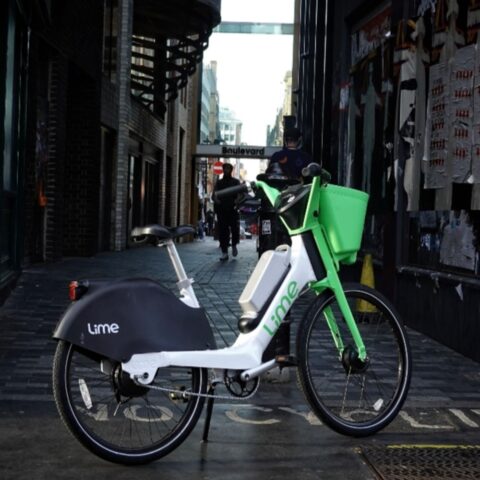
A disproportionate number of Lime bike riders actually seemed to be food delivery people, bolting up and down the roads with Deliveroo and JustEat boxes strapped to their backs. One would wonder how safe such a method of transport is, given the sheer amount of deliveries employees have to do in one single day.
When I hear the campaigners, or the Labour party, or Micheál Martin rattling on about the virtues of cyclists, and how we dare not ‘stereotype’ them, I wonder if they are deaf and mute to the experiences of other road users.
It increasingly seems as though cyclists and motorists are living in two different worlds. Motorists are afraid of saying anything, because some cyclists prove themselves to be bordering on psychotic when it comes to being criticised.
Over the summer, one Dún Laoghaire-Rathdown County Councillor, Cllr John Hurley (of the Social Democrats funnily enough), hit out at an Irish cycling website, which wrote about his opposition to the DLR connector.
“I could imagine you have an agenda to demonize certain councillors and have cycling zealots bombard them with emails,” said a brave Hurley.
The media are terrified too. Who can blame them, really, when you look at the treatment of judge James O’Donohoe.
Cyclists are a formidable lobby, and one you are simply not allowed to cross, unless you want to be hung out to dry. Why can’t we say that yes, we should respect cyclists and we absolutely must be uber-aware of them, as we were all taught in our driving theories and lessons, but that cyclists should also be extremely careful of motorists in return.
I tend to agree with the Irish Road Haulage Association who said it agreed with the judge’s comments. Eugene Drennan, IRHA Deputy Vice President, said the comments were not without merit.
“Cycle lanes have empowered cyclists to positions that they have left safety behind in their own right. Once they’re on the cycle lane they tend not to take cognisance or notice of the traffic or what’s about them. They’re either singularly focused on getting from A to B, or they have earphones in or they’re on the phone and they feel a sense of entitlement that they’re going to be in the right,” said Drennan.
Instead of piling on the bandwagon, I’d sooner ask you to spare a thought for the poor old judge who is being berated for voicing what a great many of us already think.