It’s no exaggeration to say that Ireland has changed more in the last 25 years than it did in the previous 100 years.
In this context, Diarmaid Ferriter’s book The Revelation of Ireland: 1995-2020 is a welcome addition to the appraisal of the far-reaching changes Ireland has undergone in the 21st century.
In a broad ranging work, Ferriter looks at themes such as the decline of the Catholic Church; the northern peace process; Brexit; social changes and the economic fortunes of this new Ireland extending from the Celtic Tiger boom and bust and subsequent recovery.
Ferriter explains that the book’s title was prompted ‘not only by what was revealed about the past, but also how Ireland from the mid 1990s has revealed its potential and its limitations.’ With a raft of reports and commissions bearing names such as Ryan, Murphy, Moriarty and Mahon the author leaves us in no doubt as to these limitations as they refer to various aspects of Irish life.
The Revelation of Ireland: 1995-2020 is thematic rather than chronological and so requires an element of pre-existing knowledge on the part of the reader. Ferriter makes extensive use of contemporary literary and cultural works to flesh out the themes being explored.
The book also draws on newly available historical material from the period. This is shown to good effect particularly in the chapter ‘Sand and Concrete: Northern Ireland’s Road to Compromise’ which provides an excellent overview of the protracted northern peace process.
However, it is the cultural and social changes affecting Ireland over the last quarter century that will be of special interest to many given that we are still living through these changes.
As with much analysis and commentary of this period there is much talk of the overhang of Catholic Ireland in this period. In ‘The Gimlet Eye of a Canon Lawyer: The Loosening Grip of Catholicism’ Ferriter examines in depth the scandals relating to the Catholic Church and the various commissions and reports dealing with them.
However, you would have to wonder if, by the turn of the new century, the power dynamic in Ireland had not moved on considerably from the somewhat oversimplistic liberal view of Ireland as a country still under the thumb of the Archbishop of Dublin. A lot of people would be of the view that in the 21st century, many NGOs were exercising far more power and influence than the Archbishop of Dublin ever did.
Mary Robinson was elected President in 1990 triggering a leftward and liberal shift in Irish politics, something that has only grown in strength over the last two decades. This provides the context to many of the far-reaching social and cultural changes of this period such as the introduction of same-sex marriage and the repeal of the Eighth Amendment.
However, there is little by way of critical appraisal of these or other social changes most of which are accepted, without question, as contributing to a more ‘tolerant and inclusive Ireland’. This book would have benefitted from a more robust interrogation of these social and cultural changes and, in particular, the players behind them.
In this regard, one annoying feature is the author’s repeated use of the term ‘marriage equality’ when referring to the 2015 referendum enabling same-sex marriage. Although the Thirty-Fourth Amendment of the Constitution contained a specific proposal to allow same-sex marriage, it was widely promoted by campaigners as a referendum on ‘marriage equality’.
However, even a cursory examination of Ireland’s laws relating to marriage today will show that they remain highly restrictive and certainly nowhere near the somewhat simplistic narrative around ‘marriage equality’ and its suggestion that any adult is now free to marry any other adult. Should historians really be so readily buying into the campaigning slogans of lobbyists and NGOs?
One thing that seems to be absent from this book is a recognition of the evolving dominance of the Dublin region in the life of Ireland in the 21st century. Not only is this in economic matters but it is also in the emergence of a liberal and largely left leaning political culture which now defines Ireland on the world stage. You’d wonder if Ferriter appreciates this or the fact that he may be writing from inside this same bubble.
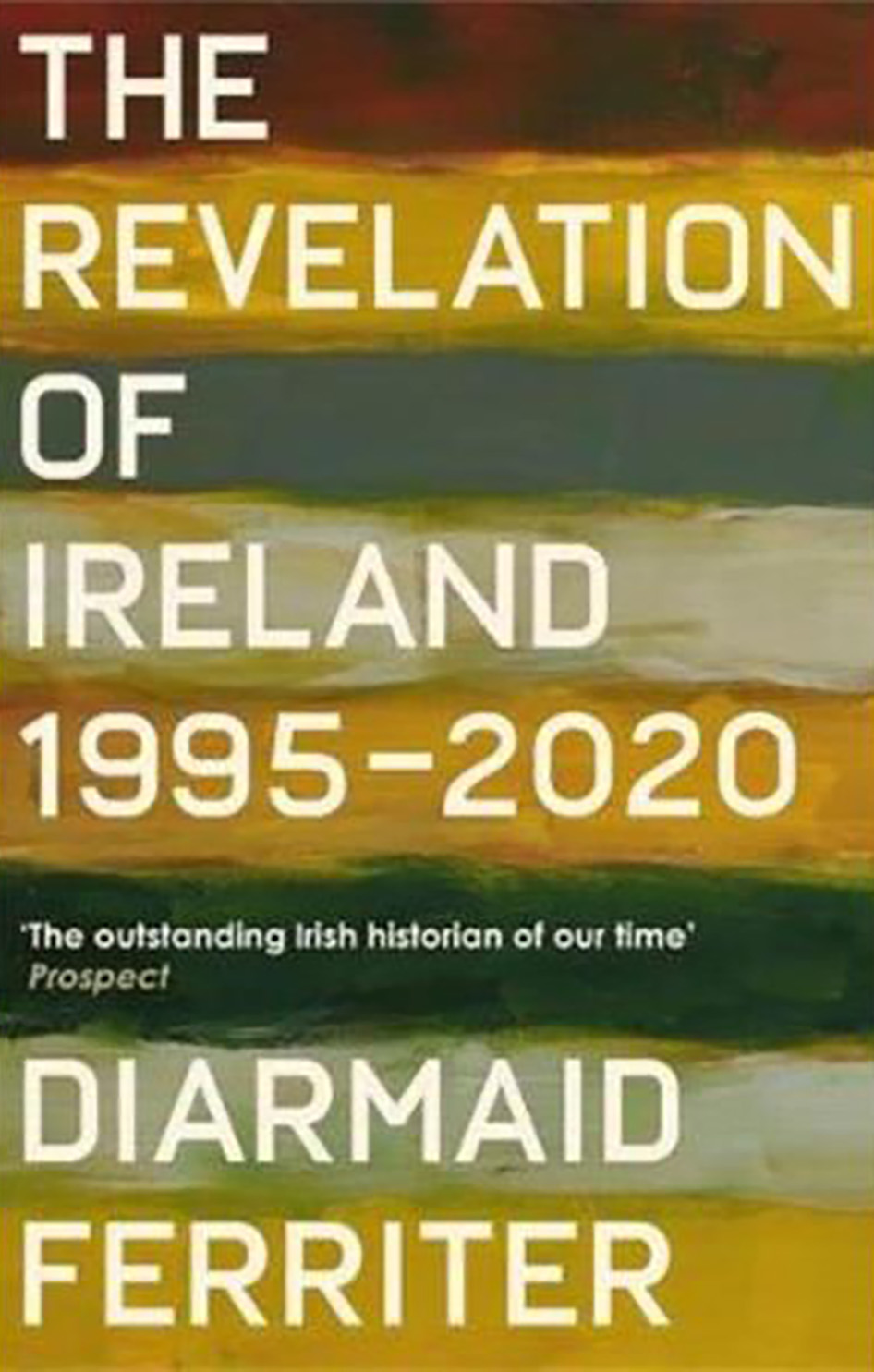
The Revelation of Ireland 1995-2020 is a well-researched and thought-provoking book. It may not be the full story of Ireland 21st century but it certainly is an essential part of the story of the far-reaching changes of this period.