Knock’s Paul Lawless is one of 16 candidates vying for a Dáil seat in his home constituency of Mayo, where a total of five seats are up for grabs.
The recently elected Aontú county councillor feels he is presenting voters in Mayo with a real alternative to challenge the domination of Fianna Fáil, Fine Gael, and Sinn Féin; he believes he is a realistic choice to stop all five seats in the constituency being controlled by the same big three parties after this election.
“Mayo is an interesting constituency,” the secondary school teacher says, hopeful at the prospect of two extra openings after Mayo gained a seat in the constituency review, moving it from a four to a five-seater. In addition, the retirement of veteran TD Michael Ring leaves at least two openings.
“There’s Michael Ring, who is a poll topper, and who is retiring. There’s also an additional seat given the constituency redraw, meaning its gone to a five-seater,” a positive-sounding Cllr Lawless says.
He says his party, Aontú, which has seen an unprecedented momentum during its election campaign, has been determined to hold the government to account. It’s done so, he says, since its foundation in January 2019, on a shoestring operation, while he believes Sinn Fein has been more of a “collusion” than an opposition.
“I’ve a sports background, and I often think that the best football teams and the best hurling teams, whether it’s Dublin or Kilkenny over the years, have always had a really strong bench, a strong squad. We can’t have a good government without having a strong opposition that holds them to account,” Lawless tells Gript.
“I think that is why there have been so many failures of this government. Sinn Fein has been more of a collusion than an opposition, and people no longer trust Sinn Fein because they don’t know where they stand on so many issues. Aontú opposed the Climate Action Bill, the only party who opposed the hate speech legislation, ” he says, while Independents also opposed the proposal.
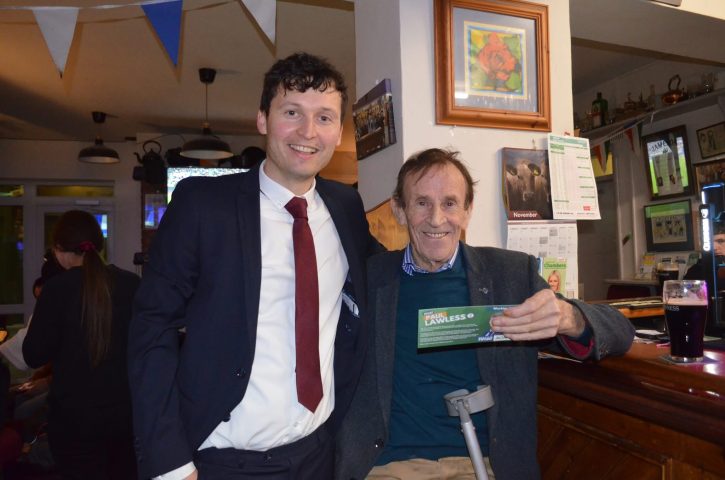
“On the family and care referendum and on the issue of immigration, Aontú has led the conversation,” Lawless believes.
He also says much of the conversation and discourse around the topic of immigration has come from Aontú research and parliamentary questions by its leader and sole elected TD, Peadar Tóibín
He says immigration is a sticking issue on the doors, while pointing to the party’s efforts to “hold this government to account” in relation to issues around government immigration policy, stating: “We have done so on a shoestring operation.”
Lawless, who was elected in June to Mayo County Council after an energetic campaign, is campaigning on the issues of housing, immigration, health, policing, housing and regional development in a part of the country he believes has been let down and neglected.
He has appealed to those in his constituency to cast a vote outside of the three main parties. Last week, he emerged as a strong contender for the fifth and final seat in Mayo, according to the latest TG4/Ipsos B&A poll – with the poll showing Lawless in joint 7th place at 7 percent, putting him firmly in the mix.
And he believes his candidacy offers voters the chance to send someone to the Dáil who will challenge the status quo and hold the bigger parties accountable.
In his short stint at Mayo County Council, he says he is making progress, including through his opposition to taxpayers money being spent on the ongoing decision to refurbish Mayo County Council Chamber (at an estimated cost of €700,000) – as well as tabling a motion to end planning exemptions for IPAS developers.
‘MAYO HAS SUFFERED’ FOR LACK OF INFRASTRUCTURE.
“There’s no doubt that Mayo has suffered in terms of infrastructure and investment. The Northern and Western Regional Assembly published a report in July, which showed that this region – the West and North-West region – has received just less than 10% of capital infrastructure investment of the overall pie. We believe that balancing regional development is really important for the people of Mayo, and it’s equally important for the people of Dublin and the East,” Cllr Lawless says.
“One of the reasons we’re seeing such congestion and competition for resources in Dublin, whether that’s for housing or childcare or health, is because we have a lopsided economy, and we want to correct that. We would do that through investing in critical infrastructure. We want to see the Western Rail Corridor opened from Athenry to Claremorris as a matter of urgency, and in the next government.”

“We also want to extend that rail line into Sligo, and connect it with Knock airport. We have the potential to be the first major airport in Ireland to be connected with rail. We can do it; we need to reopen the Western Rail corridor, and link it with the airport. It would be tremendous for the region.”
He also outlines plans to develop a motorway, upgrading the N17 to motorway status.
“We need to provide a counterbalance to Dublin. We need to give our young people an opportunity for highly skilled jobs here, and this is a key issue. It’s been given lip service for many years by the same politicians who are running in this election. So many politicians have promised to tackle the problems around infrastructure, and there has been zero delivery.”
What has the response been like on the doors?
“Incredible,” Lawless responds. “This election has been about the core issues, the bread and butter issues and the issues that Aontú has always been concerned with. Frankly, I do feel the government has been distracted with identity politics and woke politics. I am seeing on the doors that this election is about housing, it’s about crime, and the rising rates of crime. It’s about the cost of living and childcare. The bread and butter issues we all expect the government to be about, and the delivery of key services.”
“We’re seeing a failure across all of those issues.”
RISING CRIME AND A LACK OF GARDA
Lawless says that crime has been a major focus on the doors in Mayo – which has seen a rising rate of crime and a spate of burglaries reported across the county.
Earlier this month, Gardai made arrests in an investigation into 29 burglaries in Mayo, Roscommon, Longford, Westmeath, and Sligo. A worrying rise in rural crime levels have been reported across the county. The county town of Castlebar recorded 117 incidents of assaults/threats last year, 57 of criminal damage, 60 of fraud and 273 thefts as well as 37 drugs offences.
Almost 60pc of Garda stations in County Mayo recorded an increase in crime reports last year, and figures from the CSO show that crime rose in 17 towns, with 2,801 crimes reported across Ireland’s third largest county last year alone.
“We are seeing, meanwhile, a fall in the number of Garda recruits, which is worrying,” Lawless says.
“Mayo has received just one new Garda recruit in the last two years. The force in Mayo is falling, and we are absolutely seeing a deterioration of the force and its service in Mayo. It’s no coincidence then, that we are seeing a rising rate of crime. People from Ballinrobe to Ballina are really worried. I’ve canvassed at many doors to hear stories of burglaries, theft, antisocial behaviour, and assault.
“We want to ensure that we increase the number of Gardai, and reopen more Garda stations in Mayo. There are stretches of Mayo which are dangerously exposed, and are in some cases, 20 or 30 km away from a Garda Station.
“It’s unthinkable, and we need to change this. I met the Commissioner recently, and he confirmed that we are 1,000 officers short of where we need to be and where we expected to be. This is due to issues with recruitment and retention. Morale is at an all time low. Being a Garda used to be an intergenerational job and a job for life – and that link is broken. We need to address those issues.”
IMMIGRATION
Lawless acknowledged that a lot of people across the country are concerned with immigration. Has the party taken a tough enough stance, and has it been a hot-button issue on the doors?
“I would say that some of the conversation on immigration in the media has in fact centred on our own research and parliamentary questions and data. Having Peadar Toibin in the Dail, I think, has paved the way in terms of having this conversation in the Oireachtas when others wouldn’t. I have also raised this issue a number of times in the Council since my election in June, tabling two motions in relation to IPAS developers, who profiteer massively in their communities and give nothing back to local communities.
“We want to see planning loopholes removed and an Irish border agency, among key policies which we believe will tighten our borders. We also don’t want to see those with a criminal record being accepted into this country. With regard to asylum seekers who are destroying their documents, we want to see them immediately returned home. We will ensure that we will tighten our borders and will deal with the issue of immigration.
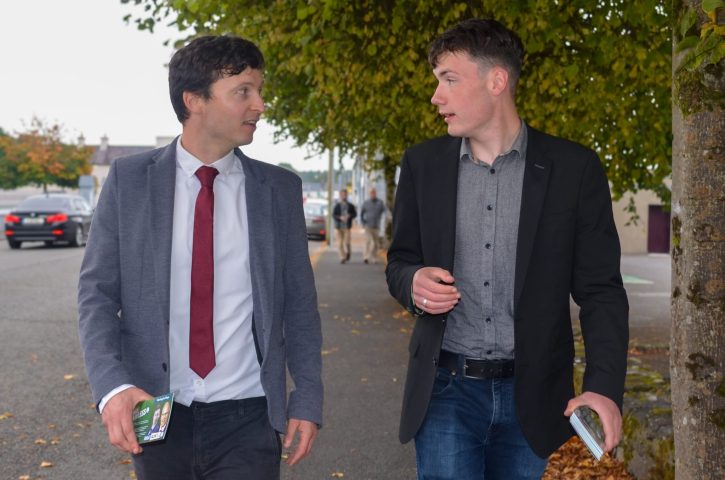
“People may think we are not tough enough, but in my view, as a party, we are a viable alternative to this government. Splitting the vote and fragmenting the vote is effectively a vote for the government which is exactly what the government wants,” Lawless says.
“Immigration is definitely an issue on the doorsteps. And that’s why I’ve raised it. That’s why it is an issue on my leaflet. People are fed up with seeing an abuse of the system, and economic migrants coming through the system. That needs to be stopped, and that is what we will do.”
Away from immigration concerns, on the doors, he says many in Mayo feel opportunities are scarce as constituents battle with spiralling rent and a cost of living which seems out of control.
“Housing is a big issue for voters. Most people I speak to will say their rent has doubled. When it comes to buying a house, Mayo County Council are building a very small number of social housing. But the Council and the Department of Housing have delivered zero affordable housing in Mayo.
“It’s incredible that we have Fianna Fail and Fine Gael reps coming out on TikTok with pre-election promises talking about delivering and prioritising affordable housing. The truth is that they have delivered zero affordable housing here, and the truth is that there’s a whole area of Mayo that doesn’t even fall into the criteria for affordable housing under this government. So there is no delivery on the ground. There’s been very little building.”
He says the other big issue for rural young people is that they can no longer build a home. This, he believes, is for a variety of reasons, including the fact that planning has “become really difficult and is taking too long.”
Lawless points to one man on the doors who told him he had been in the planning system for eight years.
“In that time, his rent has more than doubled, and the cost of building the modest home he wanted to build has increased by well over €200,000. The government has failed to deliver for young people.”
He also says childcare is a big issue, and that many providers are on the “edge of closure” due to issues with the government’s core funding model. “They can’t make their businesses profitable or viable, meaning they have to unfortunately increase their fees for families.”
Lawless states there is no right of balance, and people are frustrated on the doors that many of their young family members have had to leave Mayo for more skilled jobs and opportunities in places like London, Dublin, and Australia.
What’s behind the sudden ‘Aontúmentum’ this election? I ask Lawless. He says support has been secured and is on the rise because more people are beginning to realise the party is one which promotes “common sense.”
‘THERE SHOULD BE A TENSION OF IDEAS – WE HAVE AN OPPOSITE OF THAT’
Lawless says a strength of his own, and of his party, is a lack of concern for the “elite media bubble” at Leinster House. He points to the party’s opposition to the Hate Speech Bill and the defeated Family and Care referendums as proof that Aontu operate outside of the political groupthink.
“We seek to analyse the situation, and decide if certain things are a good thing for put people long-term or not. I think the other parties are very concerned with Dublin and the elite media bubble that surrounds Leinster House.”
“This was shown during the family and care referendum. We were the one party to stand against it, even while the opinion polls claimed that it would be a landslide victory in favour of the yes side. We took our position not on the basis of polls or the local elections, we did so on the basis of this country. I think we are made up of Statesmen and women who are not just concerned for the next election but for the next generation.”
“A lack of conviction among our establishment politicians is a major problem. It is a shocking reality that there is so much consensus right across the political spectrum. It is hard to believe that we were the only party to oppose the Hate Speech legislation, the family and care referendum, and the only party to initially raise concerns around immigration. All of these things, in a healthy democracy should be open to real debate and dialogue and discussion.
“There should be that tension of ideas in a real democracy, but in Ireland we have the opposite of that. And I think there is a direct correlation between that and career-type politics. It is easier to stay with the herd, it’s a safer position to be in. I think we’re radically different.”