At the end of October, thousands of people descended on the streets of our capital city for the ‘March for Jesus’ – a brand new initiative organised by All Nations Church in Dublin in partnership with Betania Church in the city and supported by hundreds of churches north and south of Ireland.
I spoke with Pastor John Ahern, Senior Pastor of All Nations Church, who started the Church with his wife Joanna in 2007, about the success of the event.
Pastor John says that despite the March for Jesus drawing a crowd of an estimated 12,000 people, mainstream outlets and the national broadcaster, RTÉ, decided not to cover the event, something which he fears is an indication of a “media bias” against Christianity. Despite Christians being made to feel like they are “on their own” in their beliefs, sometimes by the media, he says this is not the case, and that there is a growing hunger for God across Irish society evidenced by the large turnout.
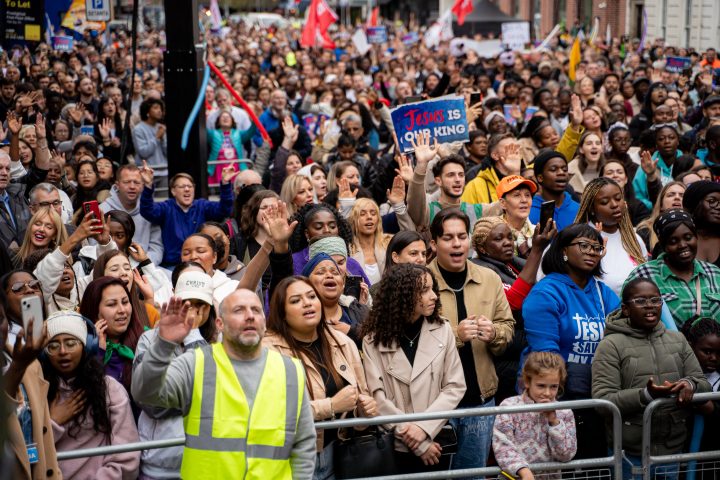
The March For Jesus is held annually in many American and European cities, including Washington, New York, London and Paris, and Pastor John felt it would be good to bring it to Ireland. Church leaders recognised a need for a “hope-filled” witness, especially in the context of recent decisions in Dáil Éireann. The march took place on the same week that Irish politicians voted overwhelmingly in favour of the Hate Crime Bill and an Oireachtas report backing the legalisation of assisted suicide. It took three months or so of planning after contacting various pastors and church leaders North and South of the country.
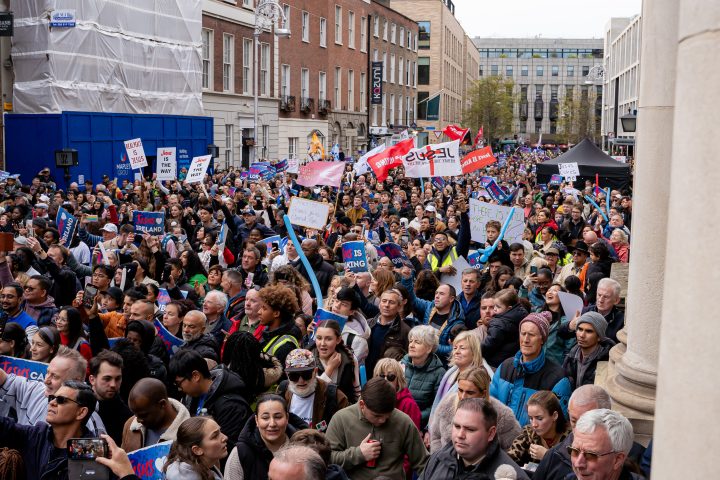
The All Nations Church senior pastor says: “One thing I felt was significant was that you had Christians from the North and South of Ireland who were marching on the day. One of the things we were praying for was healing between North and South, between Ireland and Great Britain. I don’t think any of us want to live in the past, and I believe the Church has a part to play in terms of prophetically leading, especially at a time when there is a great darkness in our society.”
On the turnout, Pastor John estimates that there were 12,000 people there.
“I fully expected to have 10,000 or more people show up. A lot of people laughed at me when I said that and didn’t believe we could get that number but we did, glory to God,” he says.
What prompted such a big number at a time when Christianity is deemed by many as irrelevant? The Pentecostal pastor believes the positive response is in part a reaction against increasing “wokeism” and cancel culture.
“The winds are changing and I personally believe a lot of people are sick of the woke nonsense permeating our society to be honest. I personally believe there’s going to be a turning back to truth and to tradition, and faith in God because these other ideas and ideologies seem to have run their course, because they don’t bring meaning or satisfaction and people are looking for hope. Particularly as things have become more uncertain.”
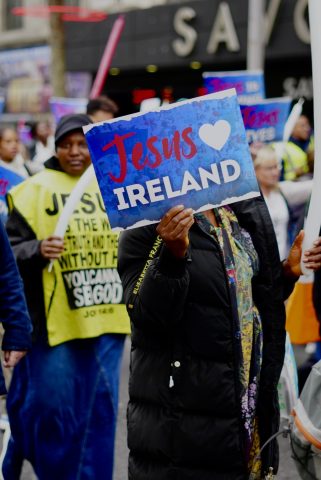
The father of five told Gript that RTÉ and others “ignored” the event, despite being informed – along with other outlets – via press release that it was taking place.
“I believe it was a great day for the Church in Ireland, and a lot of people found great encouragement from being around other believers and realising, ‘You know what, I’m not alone’ – which you may be tempted to think when you look at RTÉ and others [the rest of the] in mainstream media who completely ignored the event.”
One young Instagram influencer, a Christian from Northern Ireland, made a short video of the march after travelling from Belfast to take part. It quickly became a hit on TikTok, receiving more than one million views. The TikToker, @jed.jpeg, later made a subsequent video calling out RTE and other Irish media for not covering the event, which went viral on the internet.
‘SURELY IT’S A NEWSWORTHY EVENT?’
“I think it was significant the amount of people that turned up,” Pastor John said. “Our national broadcaster covers all sorts of marches and you just have to ask, ‘Surely, it’s a newsworthy event?’ It ultimately makes no difference to me whether they cover it, but the point being it’s meant to be a public service broadcaster but you get the impression that there is a very clear agenda. If it doesn’t fit within the narrative, they just choose to ignore it.”
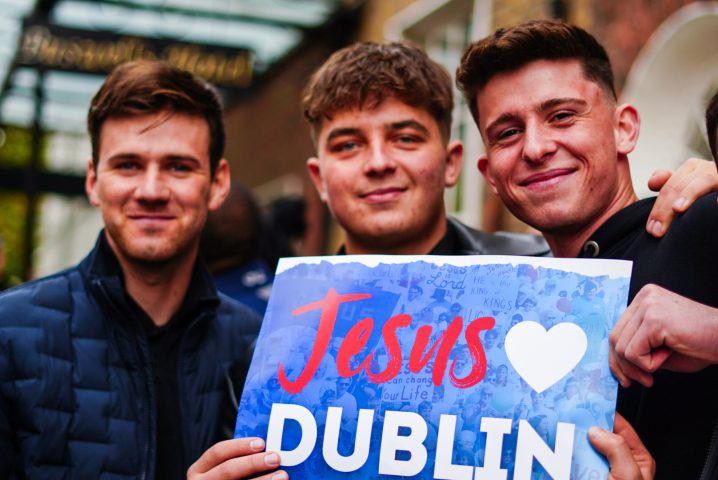
“Media were told about it in advance. The press release went out. I just found it strange that a couple of days after the march, I’m being interviewed by a radio station in Great Britain, but our own national broadcaster didn’t even acknowledge it happened. A few days later, they covered the Halloween parade that didn’t even happen, reporting how thousands of people turned up on O’Connell Street. We had well over 10,000 people, so the mind boggles. At least try and hide your bias.”
The Pastor believes there is a “polite censorship” at play which has sought to exclude those with different views to most of those adopted by the establishment and political parties.
“The problem is, certainly since Covid, you always feel like there is this covert censorship going on, that you’re excluded from polite society because of your views. You’re not propagating anything radical. You’re not some kind of far-right individual, I have over 80 nationalities in my church.
“It’s just this sense that we’ve, as a society, have very much become a society where there is only one opinion permitted. It’s not healthy. And it’s not a matter, even, of debate or discussion. You’re just going to be excluded. I don’t think that’s healthy and I don’t think it bodes well for the future of our nation if this continues.
“My gut feeling is that a lot of our politicians are going to get a message in the next election,” he added.
Pastor John says the day was a vibrant “celebration of the Christian faith and it was churches coming together to honour Christ.”
“It was also deeply symbolic that two or three days after the vote in the Dail regarding euthanasia and remnants of the Hate Speech Bill, that you had thousands of believers outside the Dail praying, worshipping God and honouring Christ, and praying for the family, praying for the unborn, praying for our nation.
“There was a beautiful diversity present in terms of there being a lot of people from all sorts of denominations – there were pentecostals, evangelicals, Catholics, presbyterians, and others – at the end of the day, the march for Jesus,” he adds.
“In essence, the March for Jesus is about lifting Christ up and bringing people together. And there’s no doubt there was a huge diversity, from priests to nuns to protestant ministers to evangelicals and charismatics. Anyone who loves Jesus Christ. And it was I suppose in a way about reaffirming the Christian identity of this nation and the call on this nation.
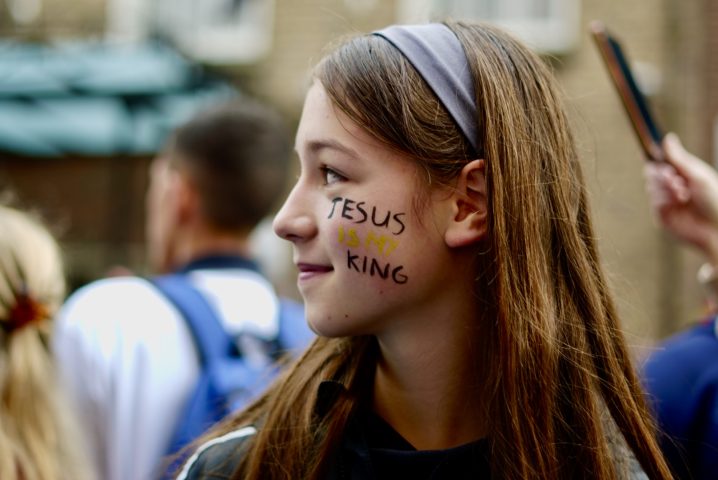
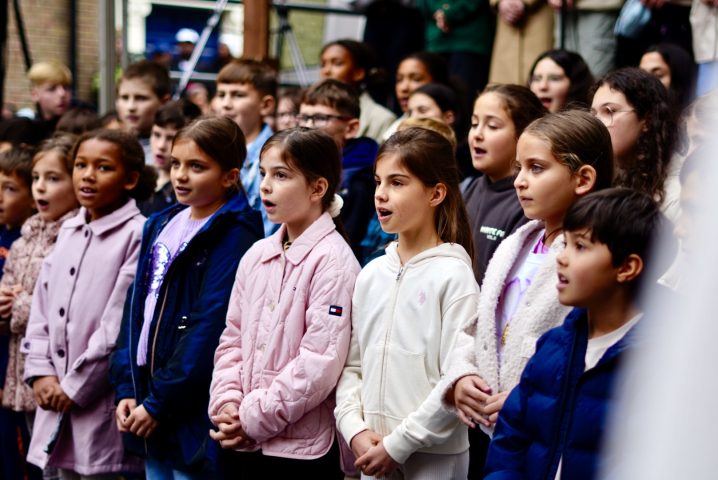
A great benefit of the day was that it was an event which attracted many families and smiling faces, the pastor says,
“There was no hassle on the day and I thought we brought a lot of joy to the city. We had a truck with a worship group at the front of the march, and when we made it to Molesworth Street, my Church worship group did the worship. We had a lovely time, with about 20 different Ministers praying. A lot of people were encouraged from the day.
“It definitely pushes back against the narrative that Ireland is a post-Christian nation; I don’t believe that. In many instances, it always seems to be those pushing other views that are platformed, and I think the bias of the Irish media is very clear. There’s evidence for anyone to see,” he adds.
‘THERE ARE GREAT THINGS AHEAD’
“There was a real diversity of age. There were a lot of young people at it, and if you look at the demographic of that march, it would make many on the left quite uncomfortable. There are a lot of young people who have a very strong faith in Christ and they’re not buying into the propaganda and I believe the Church is very much alive and well, and I believe that there are great things ahead.”
He also says that the reaction from the public was very positive on the day, adding that the “sheer volume” of people lended a certain gravity to the event.
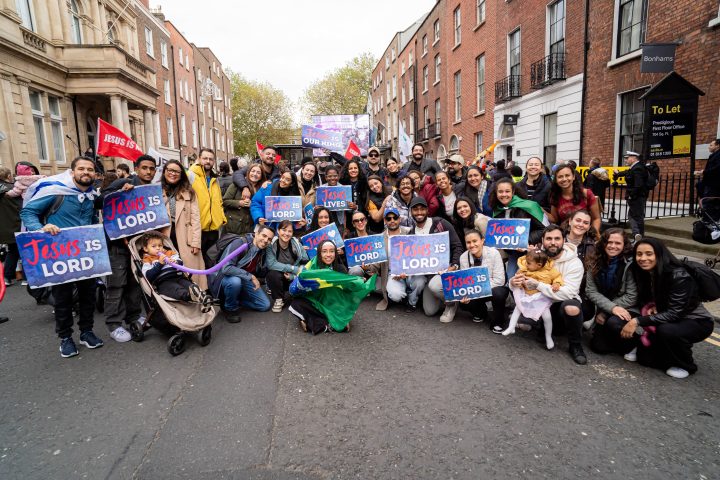
“It wasn’t a case of two or three hundred people marching; a huge amount of people turned up. We were there to lift up Christ and share the love of Jesus Christ, and I think that happened on the day. A lot of people were very encouraged and inspired by the day.”
Will there be another march next year? According to Pastor John, the demand is there. He even hopes numbers will swell to twice as many in 2024:
“We got an awful lot of messages and comments from people saying they would have loved to have been there but they didn’t know about it. Certainly I think that next year, we’ll easily have double that amount. It was beautiful seeing so many believers from Ireland and also from so many other nations there.”
“Despite our differences in doctrine and denomination and ethnicity, the one person that brings us all together is Jesus Christ, and I think that was the really hopeful and inspiring thing – there’s more that unites us than divides us, and I do believe we are stronger when we stand together as believers in Jesus Christ. There will always be people who try to fixate on our differences, but ultimately as Christians, we have one saviour – Jesus Christ – and I think there’s something very powerful about lifting him up and giving him honour, when in so many instances, it seems like that is something the powers that be are determined not to do.”
“And it’s encouraging to see that people are yearning for meaning, for hope and for the eternal. For things that they are not finding through their phones, or anywhere else. I do feel that it was very encouraging and there was genuine joy and happiness. People were singing and they were joyful, and I do believe Ireland needs more of that.
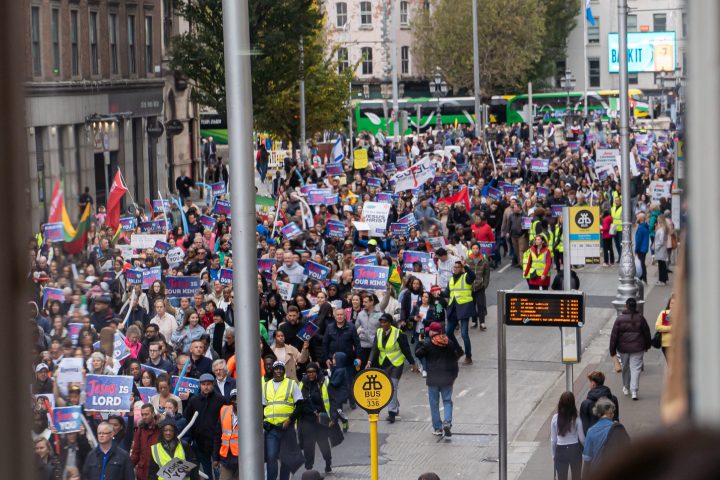
The timing of the march, the faith leader says, was deeply symbolic, and the response to the event only served to highlight people’s disenchantment with their government, in the run up to a general election later this month.
“There are a lot of people who are concerned about their children, who are concerned about the future of this country, and so you could say that in a wider sense, the turnout on the day is an indication of that concern as well. It wasn’t a protest march, it was a march affirming our Christian identity and acknowledging our existence as believers too,” he tells me.
“I think that was significant coming up to the election; for politicians to realise that there are many people who are not buying into these woke causes. There are many people who have a deep faith in Christ, and a belief in objective reality.”