The government will hold a constitutional referendum on 8 March 2024. If passed by a popular majority, the constitution of Ireland, the highest source of Irish made law, will be amended, and thereafter bear the wording of its modified text.
One of the proposed amendments under consideration in the forthcoming referendum is the removal of the current wording of Article 41.2 and replacement with a different text. Article 41.2 is one of the two articles within the constitution where “women” are specifically mentioned and the only place where “mothers” are named. The government proposes to replace the text with a gender neutral provision with no reference to or acknowledgment of the specific role women or mothers play.
The text of article 41.2 as it currently stands reads:
2 1° In particular, the State recognises that by her life within the home, woman gives to the State a support without which the common good cannot be achieved.
2° The State shall, therefore, endeavour to ensure that mothers shall not be obliged by economic necessity to engage in labour to the neglect of their duties in the home.
The provision has been condemned by the United Nations Committee on the Elimination of Discrimination Against Women as “perpetuat[ing] traditional stereotypical views of the social roles and responsibilities of women and men in the family and in society at large.”[1]
It should be noted that this provision was described as “rarely invoked” by the Supreme Court in 2020.[2]
In a country where we have a female Minister for Justice, female members of the Supreme Court, numerous female members of the judiciary, Oireachtas and civil service, it is clear that this provision has not been utilised to prevent the advancement of women in any of these fields of political power or significance.
Considering PwC’s estimation that the female labour participation rate was 69.6% in Ireland in 2021[3], it is further clear that this provision has not been utilised to prevent women’s active participation in a diverse range of fields and persuasions.
Numbers provided by the then Minister for Public Expenditure and Reform reveal that of 10 constitutional referendums between 2001 and 2018, each cost the state over €10 million.[4] One might ponder why a provision which is little used and has neither condemned nor limited any woman to a limited sphere of influence should be the subject of such substantial expenditure of taxpayer’s money in order to remove it.
The text of the provision itself does not mandate that women remain within the home. Indeed, in one dissenting judgment it was noted by the then Ms. Justice Denham (who was later to serve as Chief Justice of Ireland) that:
“Article 41.2 does not assign women to a domestic role. Article 41.2 recognises the significant role played by wives and mothers in the home. This recognition and acknowledgement does not exclude women and mothers from other roles and activities.”[5]
The provision recognises the positive contribution that women and specifically mothers make to society, motherhood being a role which is 24/7, unremunerated, physically and emotionally demanding, and profoundly impactful on the young beneficiaries of these services. It is a role which is sadly undervalued and undercelebrated by many elements of society.
The provision as it stands, acknowledges the value of a role from which most in Irish society have benefited for many years and without which the human race would have long ago ceased to exist.
It may seem that it would make little difference whether a provision that is seldom utilised, whether against women or in their favour, remains within the constitution or not.
So why should we be concerned?
Perhaps because below the surface there rages a war around the very definition of womanhood. The dismissal of attempts to express in words the unique role played by women/mothers as “stereotyping” fails to appreciate the seminal point. Yes, women can be in government and successfully lead nations just as men have done for centuries. Yes, women can make law and write seminal judgments, just as men have done for many years. We celebrate these achievements. But the utterly unique contribution of women to the human race, a contribution which cannot be replicated by biological men, is the birthing of the next generation. Somehow, affirming and recognising the important labour arising out of a role that emanates directly from this simple biological fact is considered offensive and diminishing to women. Why? Apparently progress now means erasing gender differences and replacing them with vapid gender-neutral language. Differences which should be acknowledged and protected. Differences which should be celebrated. Differences played out by centuries of Irish women and mothers, without which the common good could not have been achieved.
The principle rings true both for the public purse and for humanity: erasing women is costly.
[1] CEDAW/C/IRL/CO/6-7, 9 March 2017, Convention on the Elimination of All Forms of Discrimination against Women, Concluding observations on the combined sixth and seventh periodic reports of Ireland
[2] Gorry v Minister for Justice and Equality and A B M v Minister for Justice and Equality (1), Gorry v Minister for Justice and Equality and A B M v Minister for Justice and Equality (2) [2020] IESC 55.
[3] PwC, Despite some gains in the workplace, indicators show considerable progress is still needed – PwC analysis, available at https://www.pwc.ie/media-centre/press-releases/2023/women-in-work-index.html#
[4] Dáil Éireann Debate, Tuesday 15 February 2022, written answer provided by the Minister for Public Expenditure and Reform, available at https://www.oireachtas.ie/en/debates/question/2022-02-15/321/?highlight%5B0%5D=amendment&highlight%5B1%5D=8th&highlight%5B2%5D=amendment&highlight%5B3%5D=amendment&highlight%5B4%5D=amendment
[5] Sinnott v Minister for Education [2001] 2 IR 545, [2001] IESC 63.
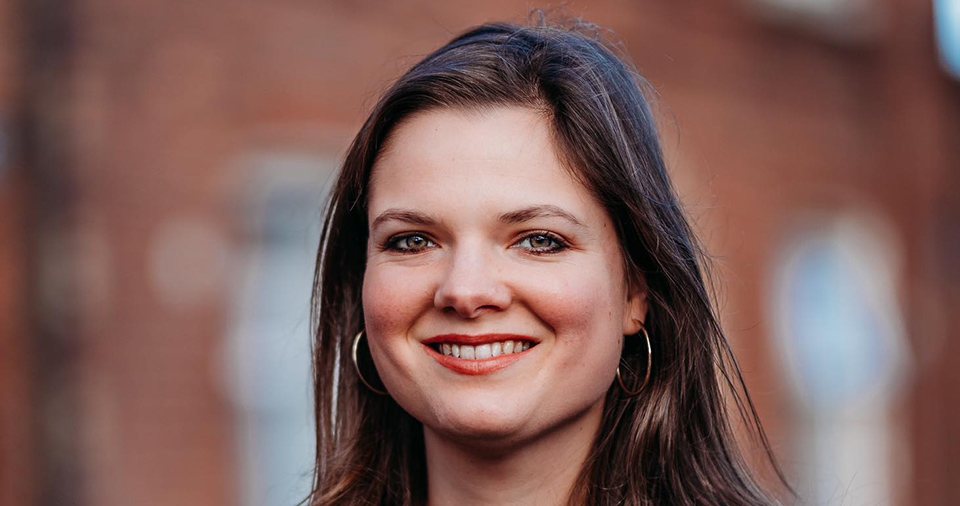
Grace Sullivan is a practising barrister. She has an LL.B. from Trinity College Dublin and a BCL from Oxford University. She worked for a defence team at the International Criminal Court in The Hague for a number of years before returning to Ireland to obtain her domestic qualification.