There was some unwillingness to get onboard with the Gardaí’s revamped new uniforms unveiled this week, as evidenced by some commentary on social media.
In response to one particular Twitter post from the Gardaí, who shared a photo of members of the force on duty in Drogheda sporting the more “modern and practical” uniform, one social media user said the new uniforms were “poorly designed”; another said the uniform resembled “aldi workwear”; while yet another, decidedly pulling no punches, said they hated the “cheap and tacky” new polo shirts.
Gardaí in Drogheda were out sporting our new more modern and practical uniform for the first time on their daily duties today.#Garda100 pic.twitter.com/TlRHY8XPmv
— Garda Info (@gardainfo) August 15, 2022
“I actually preferred the old uniforms,” one lady added. “The new uniform looks more like P.E gear now than a uniform”.
“Going downhill like everything else in Ireland”, another deeply unimpressed person said, while several compared the new look to a children’s dressing up costume.
“Thank you for shopping at Lidl,” was a response which drew laughing emojis.
The change in uniform – which abandons the formality of a shirt and tie, to be replaced by a casual blue polo-shirt and cargo-style “optional” trousers – is only the third time in the force’s 100-year history that there has been a formal ‘upgrade’.
But is it really an upgrade?
The broad-based view, as evidenced by the majority of responses to the photo and other comedic takes seen on the internet this week, seems to be that the overhaul is actually for the worse. The general consensus, and I agree, is that the new look is too informal to look professional or give an air of authority, and will do little to help Gardaí in commanding the respect needed from the public. The job of the Gardai is a serious one, and the uniform must therefore be taken very seriously. In order to be the keepers of the peace, a certain air of authority, even bordering a little on fear, should be commanded.
A look-back at the evolution of the uniform shows that the modern makeover represents a drastic departure from the one first unveiled when an GardaSíochána was formed back in 1922. The Garda Centenary Online Photo Archive created for the centenary last month gives us a glimpse into the uniform of the past, when officers looked almost militaristic – donning a double-breasted jacket and a crisp shirt and tie. It was an image which was entirely more commanding:
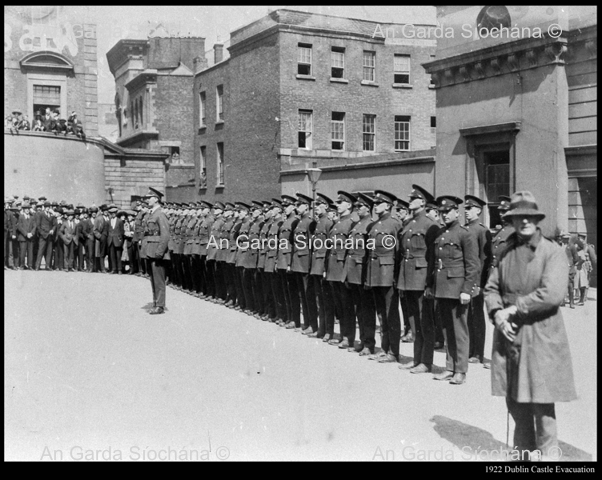
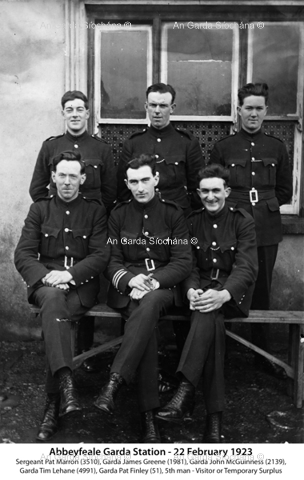
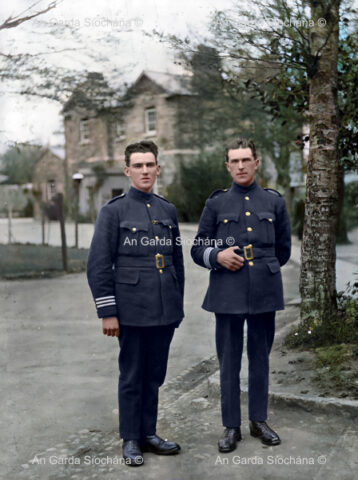
On this day in 1922 the very first recruits joined An Garda Síochána and made their way to Dublin’s RDS to begin their formal training.
100 years on, over 14,000 Gardaí nationwide are dedicated to protecting communities and keeping the people of Ireland safe.#Garda100 pic.twitter.com/8QVWCEon3e
— Garda Info (@gardainfo) February 21, 2022
The uniform remained formal down through the years, keeping the sharp shirt and tie and military-style jacket:
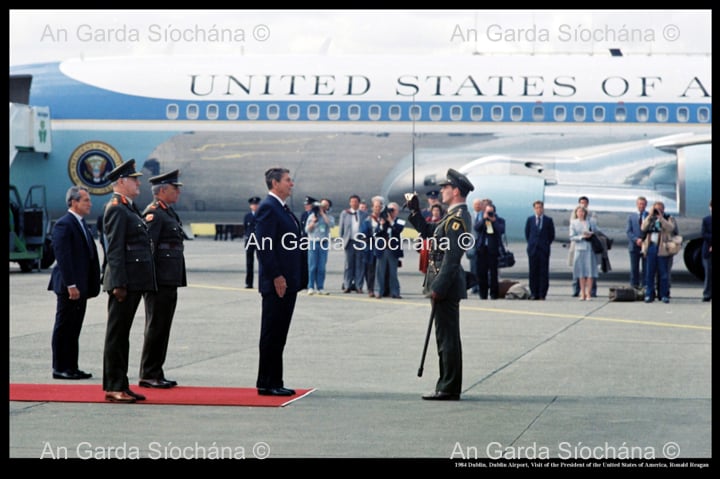
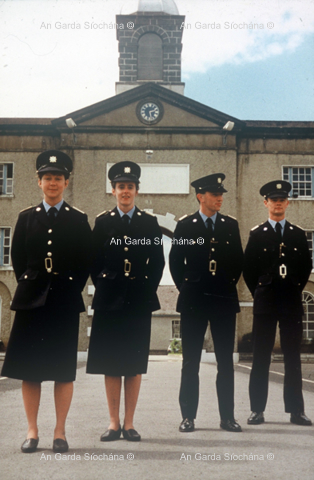
The reaction and interest in the new uniforms, at a time when there’s greater demand for more Gardaí on the streets than investment in the uniform they wear, points to the fact that police uniform does indeed have a very big psychological influence. Clothing – we all know it – has a powerful impact on how we see and perceive people. We can’t help but form impressions about people based on what they wear, and the same goes for police officers.
Research (compiled by a former US police officer) shows that the uniform worn by police has been found to have a “profound” psychological impact on those who see it – and also indicates that even slight alterations to the style of the uniform will alter the way in which citizens perceive the officer.
The smart, crisp uniform worn by police is supposed to convey power and authority directed at those employed as the ‘guardians of the peace’. When a Garda puts on his or her uniform, they are regarded in a very different way by the public, and they themselves come to embody each of the stereotypes we have about all police officers.
One study – which I think points to the importance of a more formal uniform – showed that models were “consistently rated as more competent, reliable, intelligent and helpful” when pictured in a formal police uniform than they were dressed in casual street clothes. That’s significant. In another experiment, also detailed here, people were asked to rank 25 different occupational uniforms by different categories of feelings. They consistently ranked the police uniform as the one most likely to induce feelings of safety. So research clearly supports the idea that the police uniform holds power and authority.
In a similar vein, studies have also underpinned the importance of children wearing a school uniform – and the correlation between the discipline learned by wearing a smart uniform and achieving success. One prominent 2016 study examining student behaviour and test scores in 39 countries including the US and Canada found that “for countries where students wear school uniforms, students listen significantly better, there are lower noise levels, and lower teaching waiting times with classes starting on time.” The study concluded that the most disciplined students are the ones who perform the highest, and is one of many pieces of research that once again signals the power of a smart uniform.
Not only then does uniform matter for those who see it, but it matters for and impacts on the performance and mindset of those who wear it.
Maybe, then, it’s little wonder the majority of other European nations have yet to ditch the shirt and tie and embrace the primary school-esque polo shirt and cosy and casual zip-up fleece. Perhaps we should have looked to the French uniform, or that worn by the nordics, both of whom dress to command respect.
Or if we really wanted to demand authority, the standard uniform of the police in Milan provides some serious inspiration:
Thanks. I hate it.
Only one police uniform will do, Milan’s Caribinieri. https://t.co/hjb25L3sOY pic.twitter.com/ZPInsJRqfi— ☃️❄️ Paul Anthony Ward 🎄 (@PaulAnthonyWard) February 7, 2022
Anyway, there probably wasn’t much wrong with the old Gardai uniform in the first place. For 100 years it has served its purpose and worked well to command authority and perhaps even the small amount of trepidation needed to keep some of us in check. An update isn’t always an improvement.