It is 70 years since Whitaker Chambers’ Cold War classic, ‘Witness’ was first released a few years after the famous trial in the United States where Alger Hiss was accused in 1948 of having spied for the Soviet Union in the 1930s. Described as part literary effort, part philosophical treatise, the autobiography of a former Time magazine editor, chronicles Chambers’ descent into communism, subsequent escape and his catapulting to the public eye through the Committee on Un-American Activities shortly after World War 2.
For many conservatives in America Witness remains a timeless classic. In his Foreward to the lengthy tome, Robert D. Novak exclaims “Witness changed my worldview, my philosophical perceptions, and, without exaggeration, my life.” High praise indeed.
Ronald Reagan awarded Chambers a posthumous Medal of Freedom in 1984, recognising the high esteem the writer has been held in certain circles, stating:
“As long as humanity speaks of virtue and dreams of freedom, the life and writings of Whittaker Chambers will ennoble and inspire.”
70 years on, the book endures, with relevance and resonance in an era of cultural Marxism but separated by the thirty years since the end of the Cold War, the modern reader is left with more questions than answers.
The central theme of the book is the Hiss trial, which, often cited as the ‘trial of the century’ is the main draw. And is probably its main disappointment. Written for its time, the book – a lengthy and dense 700 pages – is hard to commit to and raises more questions than answers in a lot of respects.
From this writer’s perspective, the appeal is the level of esteem the book and the author is held in by conservative writers and commentators who extol its virtues. In its distinct parts, there is much that engages and enthrals. The letter to his children at the start of the book is an emotional and appealing epistle. The autobiographical background to his youth, the suicide of his brother, stands on its own as a commentary of that period.
Yet, despite the details, it feels like there is much more to be said. Chambers never quite captures for the reader the appeal that lured him into Communism and the underground. Perhaps, because of the cultural and political struggle between communism and capitalism of the time, because Chambers was so deeply embedded in the struggle, he is unable to step out, or to step back, to give the necessary perspective that one who is 70 or 90 years distant from that period yearns to understand.
Similarly, although he tries to explain it at length, his enlightenment, whether gradual or a Damascene event, remains elusive. He touches on the intrinsic evils of communism manifest, its transition into national socialism in the Soviet Union; the disappearances and rumoured executions of its members but the reader never quite understand why he abandons the Communist Party and his underground activities.
The details of the Hiss trials – parts I and II – are … interesting. But there must be more. Page upon page of transcripts focus on the back and forth about the minute details of whether Hiss ever knew Chambers – which he denied to his dying day – which forms the basis of the accusation that Hiss – a very high-level government functionary who played a key role in the establishment of the United Nations and worked closely with the Secretary of State – was a Communist spy.
The minutiae is interesting. The forensic enquiries of the committee members, and in particular Richard Nixon, the future impeached President, are important but they ask a lot of the reader to read so much transcribed from the trials that could be found elsewhere. For Chambers, after enduring the trail for years, seeing his life turned upside down because of what he felt was his duty to denounce the Communist underground in the United States, the very real risk to his life, his loss of livelihoods, and the character dissection he underwent, and the lingering doubt maintained in the public sphere as to the veracity of his claims, probably force him to put all the details in writing.
Maybe it is a form of catharsis and an effort to draw a line under the questions that remain but from a literary perspective, it become a slightly turgid read.
From a practical perspective, if the aim was to tell his side of the story, to draw a line under the debate of who was telling the truth, it is not completely convincing. Questions persist as to why Chambers initially refused to admit that he had witnessed espionage in his underground activities and then does a volte face a short time later, revealing documents and rolls of camera film that apparently confirmed Hiss’ involvement in Communism and espionage against the US government.
I want him to be the hero; to be the one on the side of right but his own words leave a residue of doubt. There are moments in the book where it feels that he does protest too much and extols his own virtues to an excessive level.
With a more sympathetic ear, this is the book of a man who had to endure and the words, the thoughts and the feelings were undoubtedly still very raw at the time of writing. He was not a disinterested observer to the events but was inextricably intertwined in an era defining battle of good versus evil.
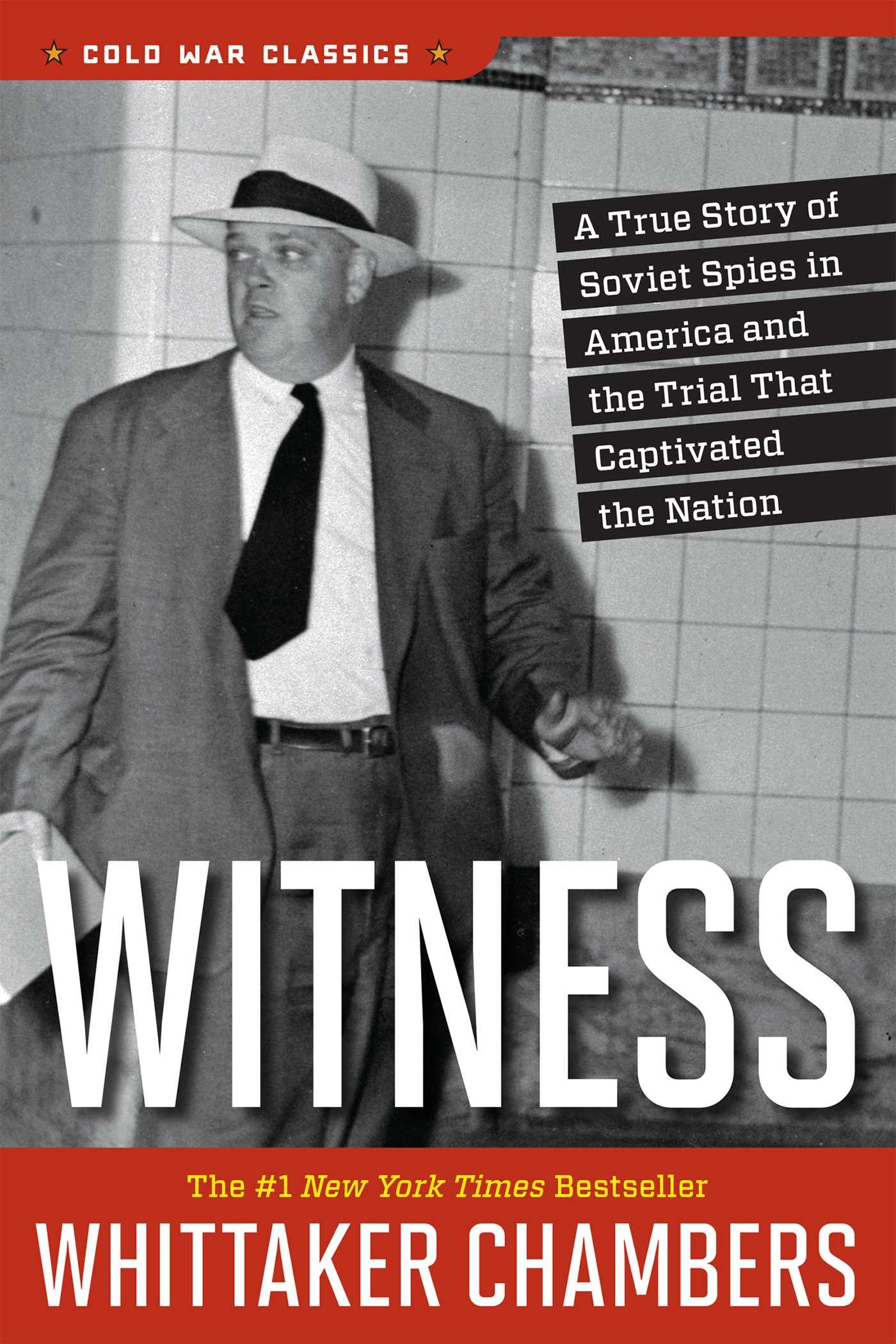
- Publisher : Regnery History; Reprint edition (December 8, 2014)
- Language : English
- Paperback : 718 pages
- ISBN-10 : 162157296X
Dualta Roughneen