In the Philippines the Christmas season begins in September! Yes, the first of the so-called “-ber” months (Sept, Oct, Nov, Dec), so from early in that month the Christmas decorations will be in place in the shops, the assistants will be sporting their Santa hats, carols will be the piped music in the malls, etc. This is money-making pure and simple, with a short interruption for Halloween & All Souls, and has for me the deleterious effect of dragging out interminably the real celebration of Christmas which should rightly occur in mid-to-late December. But once you get past the crass commercialism there are some delightful traditions in the Philippines surrounding Christmas.
One of the most beautiful traditions is simply called “exchanging gifts” and even in areas where no English is spoken, this phrase is in use. Of course, gift giving is an established practice around Christmas universally, but I think it’s even more central in the Philippines. Exchanging gifts happens in almost every setting or group: not only the family and neighbours, but at school, in the office and in any other group. What I like especially is the fact that what is stressed is: “it’s the thought that counts”, because often among poorer groups their budget will be quite limited. But still, even for the equivalent of a euro, they will buy a gift to give to another. And this, surely, is the central meaning of the original Christmas – the wondrous exchange when God became one of us: The Divine shared in our humanity, so that we could share in God’s divinity! And our practice of “exchanging gifts” is a mirror, however imperfect, of that stupendous truth.
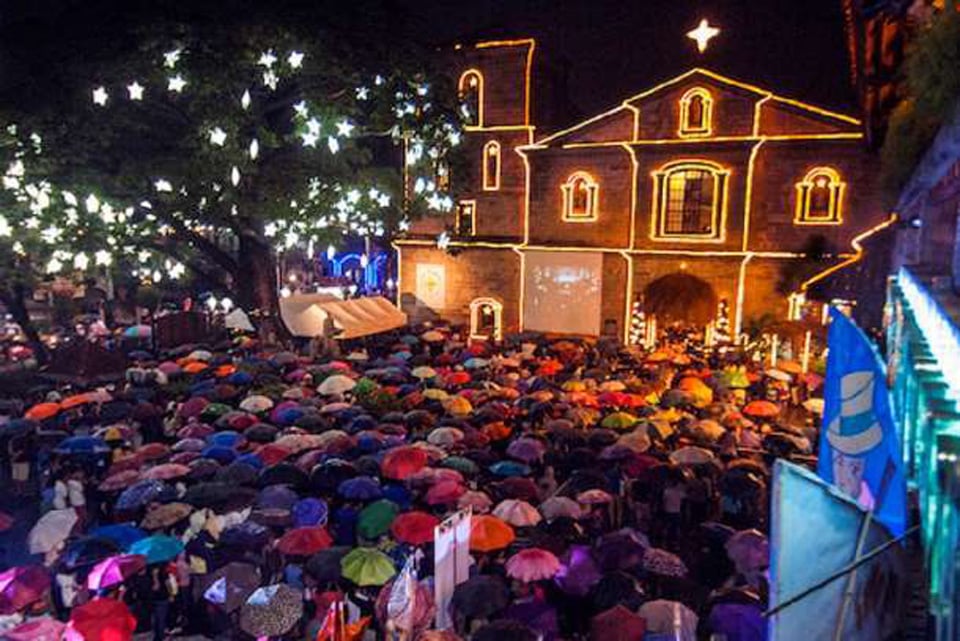
Apart from the time of Advent preparing us for Christmas, in the Philippines there is a tradition, going back to Spanish times, of a novena of pre-dawn Masses from December 16-24, called “Misa de Gallo” or “Aguinaldo Mass”. The former phrase means “The Mass of the Rooster” and is based on the tradition that a rooster crowed on the night of Jesus’ birth. It’s also connected with the belief that the Mass should be over before cockcrow, so the Misa de Gallo usually starts at 4am, still pitch dark, and ends just as the first streaks of the dawn are showing in the pale sky. (Interestingly the word “Aguinaldo” means a bonus or gift, so it also fits very nicely into the spirit of gift-giving). The Misa de Gallo, whether in the cities or in the country areas, attracts enormous crowds. (It’s not difficult to rise at such an early hour, considering the balmy, tropical climate). The church will typically be full at 3.30am, so people arriving after that will bring their own fold-up chairs.
After the Misa de Gallo, snacks are on sale in the church grounds. These are typical Filipino delicacies: for a drink you can choose between hot chocolate (cacao is plentiful) or hot ginger juice; the eats are mostly different types of rice-cakes. This is essentially a church initiative, even if the fast food chains have now adopted it. In the various Redemptorist churches sales are brisk and the money collected goes to various charitable causes. Another fund-raising endeavour is hymn-singing, either in homes or even factories, etc. If a neighbourhood is being visited, the choir will go from house to house, perform their songs and collect any contribution offered (and it’s always offered). Factories or other places of business will be sent a letter in advance announcing the date/time of the choir’s visit, and as well as a donation, food will be offered. Again, the collected money will be used for various charitable causes. Another seasonal effort at bringing joy into the lives of the less-fortunate is to place a Christmas tree on the sanctuary of the church, with the branches festooned, not with decorations, but with pieces of paper with the names and addresses of poor families in the parish. Churchgoers are encouraged to take a piece of paper from the tree and to buy some goods for the family: whether food, clothing, toys, etc. When their hamper is ready they are further encouraged to deliver it to the family in question; this is to ensure that they can actually see the conditions in which many of their poorer co-parishioners are actually living; a reality about which many of the more affluent parishioners may be blissfully unaware. Otherwise our parish staff will do the delivery.
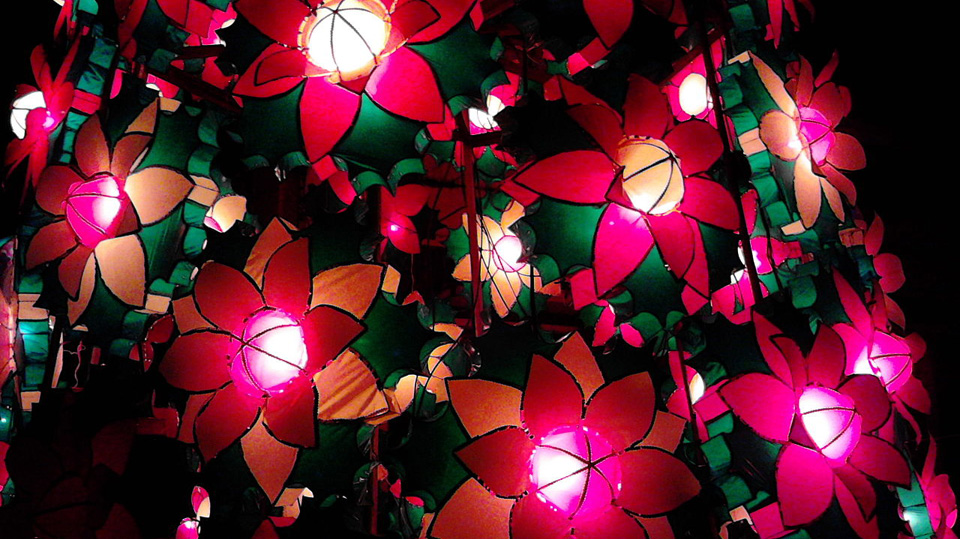
Finally, another way of sharing our bounty with the less fortunate is by buying Christmas lanterns made by prison inmates. As I wrote in my article on prisons, making the lanterns, multi-coloured with intricate patterns, demands close attention to detail but is also a calm-inducing, therapeutic activity for the prisoners.
I composed processions called “The Way of the Crib” for Advent, and “The Way of the Light” for Eastertide. In the Philippines, generally speaking, the men don’t show as much interest in religion as the women, but a procession is more of an occasion than a church event, so they are more eager and less self-conscious; still, if they show any hesitation, they will be encouraged, cajoled or blackmailed to attend by the women in their lives: mother, wife or girlfriend – and woe is he who does not respond to such feminine inducements! Something is carried shoulder-high along the pathways: if it’s Lent, then a cross is carried; if it’s Advent, then it’s a crib. The latter is patterned on the Lenten Way of the Cross. This one celebrates the events surrounding the Lord’s birth, and so a large crib is carried shoulder high. We pause at various stations and listen to a reading commemorating this wonderful time: the Annunciation, Mary’s response, her Visitation to Elizabeth, etc., The only troubling reading is Herod’s murderous plan, then we’re back with the Birth, the Angels, the Shepherds, etc. It’s a procession of joy. After winding along the village paths in the cool of the evening, with Christmas lights blinking on the “stretcher” carrying the crib and people carrying candles and singing “Silent Night” and“ O Holy Night” and other seasonal Filipino hymns, we finally arrive at the chapel, and enjoy bowls of sweet rice cooked in cauldrons.
I especially like to see children at such events, because it’s sure to sow a seed that will bloom in the future into a cherished memory. Yes, Virginia, there really is, if not a Santa Claus, then definitely the magic of childhood, when life is full of innocence and play and wonder. And for children walking in “The Way of the Crib”, with their parents and friends, holding their candle, looking with eyes full of wonder at the crib held aloft on the men’s shoulders, with blinking Christmas lights draped over the figurines in the crib – all this is like an acorn of happiness and contentment which will grow into an oak of gentle, serene memories, to soothe them when they tread the somewhat wearier, more serious path of adulthood, having left behind that lovely childhood age of endless excitement, adventure and ever-new delights.
